Horses
International Horse Transport from the USA to Asia-Pacific, the Gulf and Europe
Racing, breeding and competition horses moved door to door — barn in the United States to barn in Asia-Pacific, the Gulf or Europe.
Flying Horse Services began as a horse shipping company and horses remain the core of the business. Over more than forty years the company has moved racing stock, breeding stallions and broodmares, sport horses and returning racehorses between the United States and the world.
Japan, Hong Kong, South Korea and Australia are the destinations we work most, and Saudi Arabia, the UAE and Qatar are the fastest-growing. We also run a European lane — Ireland, the UK, France, Belgium and the Netherlands — for bloodstock and sport horses. We ship from whichever US gateway suits the horse — Los Angeles and Dallas most often — and fly a groom with every international consignment.
An international horse move is roughly ten percent flying and ninety percent preparation. The flight is the part everyone pictures; the isolation scheduling, the test panel, the health certificate endorsement and the air-stable loading are the parts that decide whether the horse arrives sound, calm and on the day you needed it.
What we handle
- Thoroughbred racehorses and returning racehorses
- Breeding stallions and broodmares
- Show jumpers, dressage and eventing horses
- Polo ponies and endurance horses
- Yearlings and sales purchases
- Ponies and miniature horses
How we do it
Equipment, people and permits.
The parts of an animal export that go wrong are almost never the flight. They are the crate, the paperwork and whoever is holding the lead rope at 3am.
Air stables
Horses fly on the main deck in air stables configured to the shipment — single, pair or triple stalls depending on the animal, the airline and what you are willing to spend. Configuration is a welfare decision as much as a cost one, and we will tell you when the cheap option is the wrong one.
Professional flying grooms
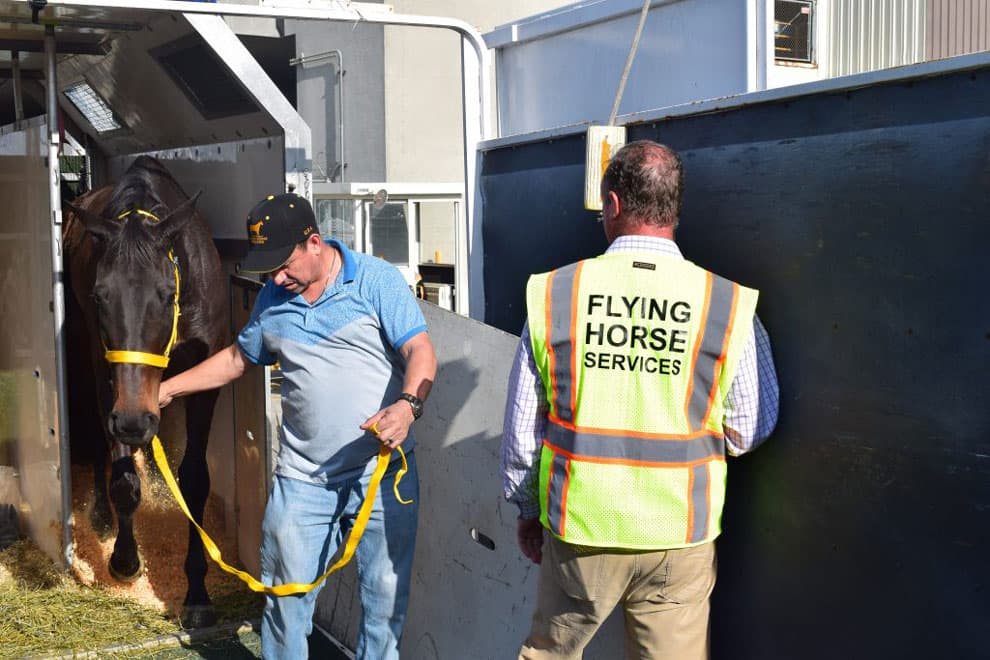
Experienced horsemen travel with the animals on every international shipment. They keep the horses hydrated, keep forage available throughout the flight, monitor for signs of stress and handle the offload and loading into trailers at the destination.
Airline crew briefing
Every airline handling team is briefed on air-stable handling before loading. Horses read handling — a quiet, competent loading is the difference between a horse that travels well and one that does not.
Ground transport at both ends
Company vans and trailers move horses from the origin barn to pre-export isolation, from isolation to the airport, and from the destination airport onward. One company, one chain of custody.
Destinations
Where we move horses
Each destination has its own protocol, timeline and market. These are the lanes where demand for this category is strongest.
Philippines
Arrives MNL
≈14–15 hours from the West Coast
Japan
Arrives NRT
≈11 hours nonstop from the West Coast
South Korea
Arrives ICN
≈12 hours nonstop from the West Coast
China
Arrives PVG
≈13 hours nonstop from the West Coast
Hong Kong
Arrives HKG
≈14 hours nonstop from the West Coast
Saudi Arabia
Arrives RUH
≈19–21 hours via a Gulf or European hub
UAE
Arrives DXB / DWC
≈16 hours nonstop from the West Coast
Qatar
Arrives DOH
≈16 hours nonstop from Dallas–Fort Worth
Thailand
Arrives BKK
≈17–19 hours via Asian hub
Indonesia
Arrives CGK
≈17–19 hours via Asian hub
Australia & NZ
Arrives MEL
≈17 hours nonstop from the West Coast
Singapore
Arrives SIN
≈18–20 hours via an Asian hub
India
Arrives BOM
≈20–22 hours via a European or Gulf hub
Ireland
Arrives SNN
≈8–9 hours
United Kingdom
Arrives STN
≈7–8 hours
France
Arrives CDG
≈8–9 hours
Belgium
Arrives LGG
≈8–9 hours
Netherlands
Arrives AMS
≈8–9 hours
FAQ
Horses: common questions
How much does it cost to fly a horse internationally?
A single horse typically runs $20,000 to $30,000 — air freight, pre-export isolation, testing, USDA fees and a groom travelling with the horse, with ground transport to quarantine billed separately on top. Horses shipped as a group cost materially less per head than one travelling alone. See our full horse shipping cost calculator for the complete breakdown by species and group size, or send us the details and we'll put a written figure to your specific move.
How long is a horse in quarantine before it flies?
The pre-export isolation period is set by the destination country's import protocol, not by us, and varies from a few days to several weeks depending on the country and the species. We tell you the actual figure for your destination in your quote.
Is flying stressful for horses?
Less than most owners expect, when it is done properly. Horses generally travel well in air stables — the stressful parts are loading and unloading, which is exactly why we brief handling crews and send grooms with the animals rather than trusting the process to whoever is on shift.
Do horses fly in the cargo hold, or somewhere else on the plane?
Neither, in the way most people picture it. Horses travel on the main deck of a freighter or a combi aircraft, in air stables built for the shipment — not in a pressurised hold stacked with luggage. The main deck is climate-controlled, and a groom is aboard for the entire flight, keeping forage available and watching for any sign of stress.
How do you transport a horse overseas?
The flight is the smallest part of it. We start with pre-export isolation at a USDA-approved facility, where a USDA-accredited veterinarian runs the destination country's test panel. Once results clear and USDA APHIS endorses the International Health Certificate, the horse flies in an air stable on the main deck, with a groom travelling alongside. On arrival, our people handle the offload and coordinate with the receiving agent — see How Animal Export Works for the full step-by-step.
What is shipping fever, and how do you prevent it?
Shipping fever is the term for a respiratory illness that can follow prolonged transport — generally linked to a horse's head being held in one position for extended periods, dehydration and the general stress of a long journey suppressing the horse's normal ability to clear its airway. It's a documented risk on long ground hauls in particular. On our flights, grooms keep forage and water available throughout and are aboard the entire flight watching specifically for early signs of respiratory distress or stress. If a horse has a health history that concerns you, raise it during the pre-export veterinary exam — that's exactly what it's there to catch.
Can you collect the horse from my barn?
Yes. We arrange pickup from the origin barn, transport to a USDA-approved pre-export isolation facility, and onward to the airport in our own vans and trailers. At the destination our grooms handle the offload and assist with loading into trailers.
Do you handle sales purchases?
Yes, including purchasing assistance at major Thoroughbred sales. If you have bought a horse and need it moved, or you need someone at the sale on your behalf, both are within what we do.
Also
Other things we move
Cattle
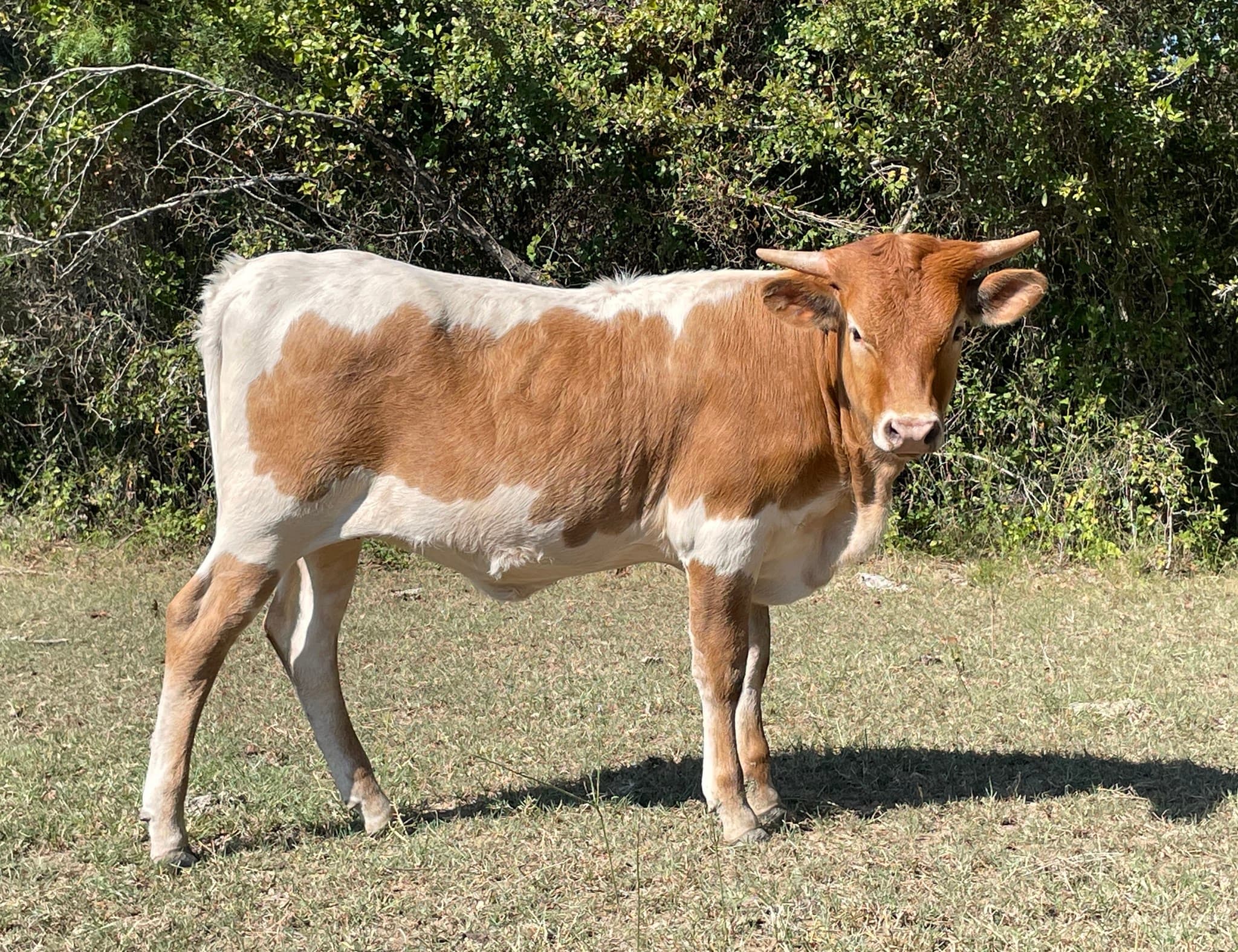
Brahman and other tropical and temperate breeds, bulls and group consignments — priced and protocoled by breed and destination.
Sheep & Goats
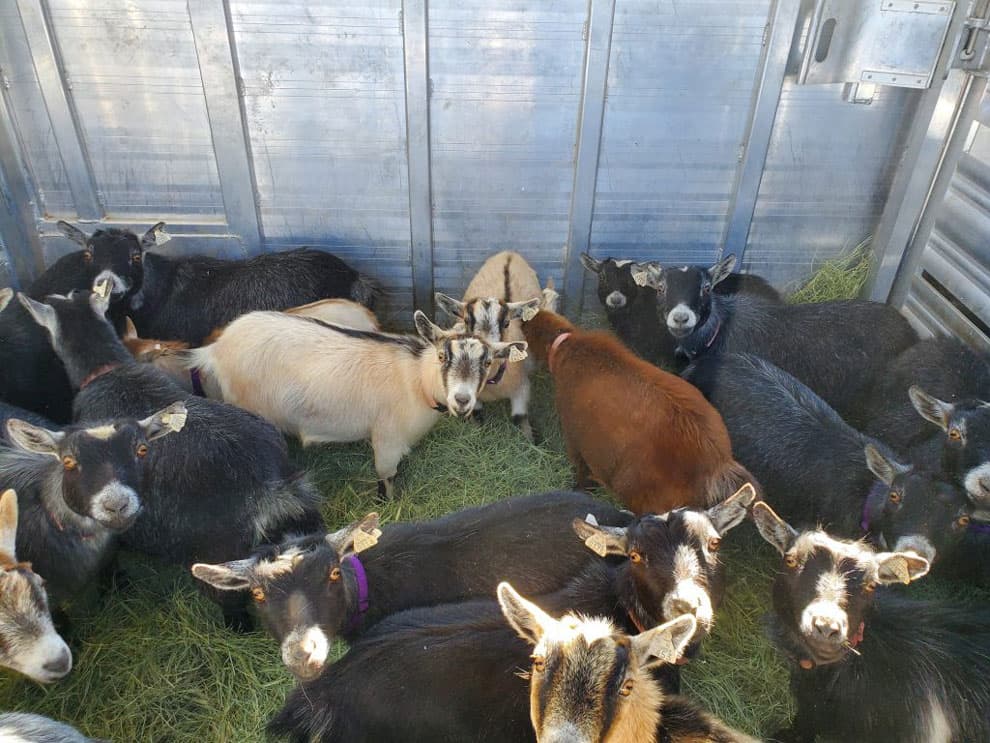
Boer and Nubian goats, breeding rams and ewes — regulated together under USDA's scrapie program, and often shipped together.
Swine, Poultry & Camelids
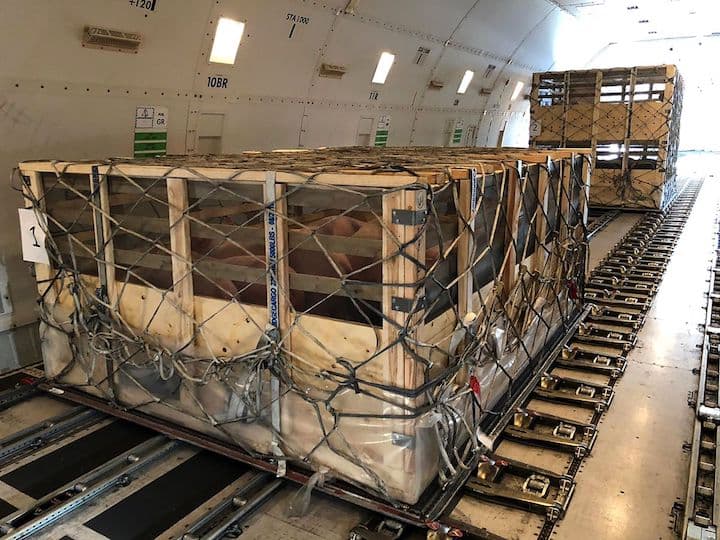
Swine, poultry, camelids and mixed livestock genetics — moved as single consignments or as a recurring program.
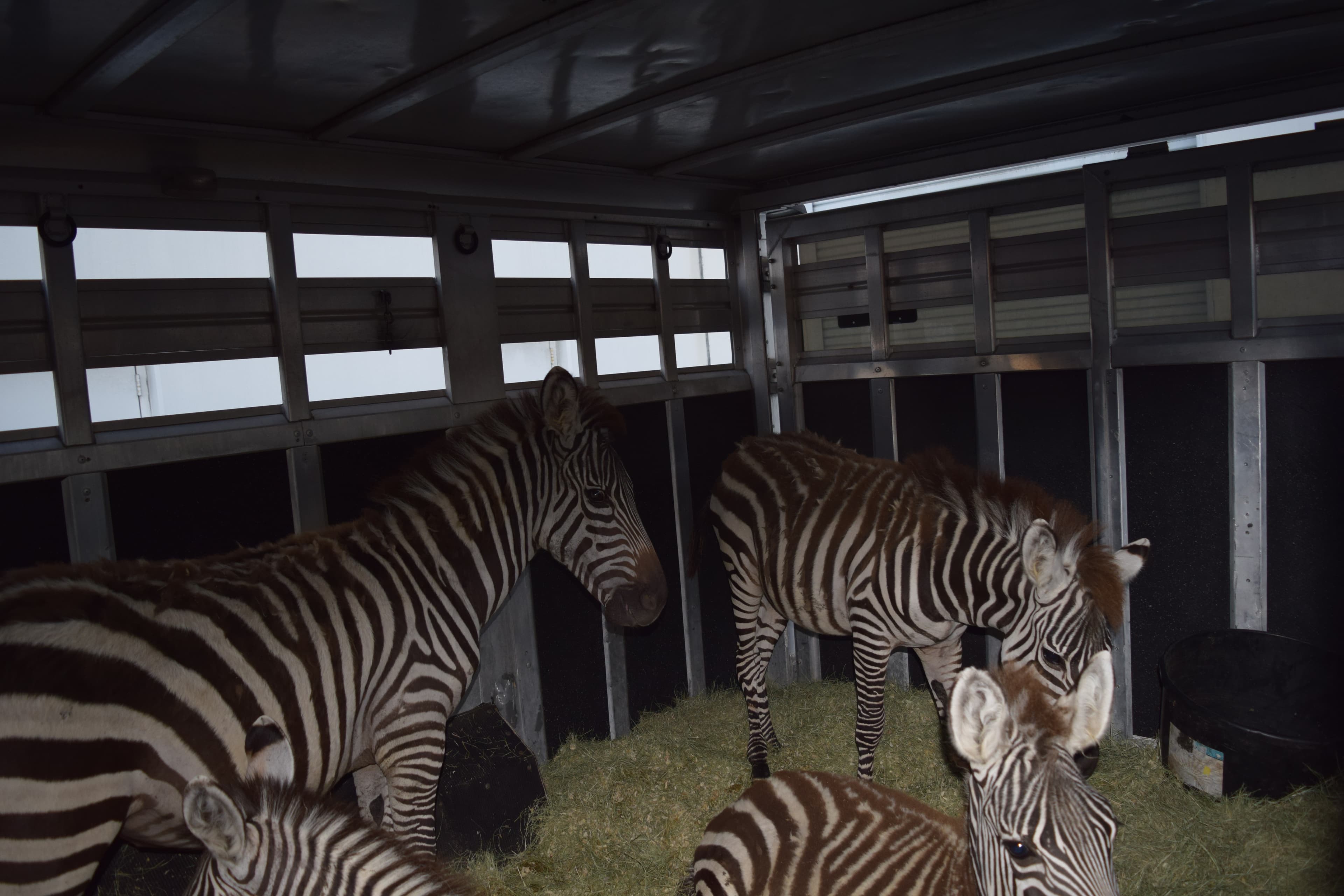
Exotic & Zoo Animals
Zoo collections, wildlife parks and private exotic consignments — including CITES-listed species — moved with the permitting handled.
Ready to move horses?
Tell us the species, the number of animals, the origin, the destination and your target date. We come back with a written quote at no charge. If we can't do the shipment, we'll email you and say why.